How to embed AI guidelines that your people will actually use — moving from policy to practice without losing trust.
Practical, human-centric, science-led approaches to help organisations move their people from abstract change to tangible action — and from intention to sustained behaviour shifts.
Brand-new data on AI adoption, skills gaps, stakeholder trust, inductions, and retention — backed by 2m+ people and 11m+ data points from ECO, the Early Careers Observatory.
We've curated 25+ need-to-know emerging trends and statistics that are set to define the state of workplace skills over the next few years of transformation.
New research has identified a concerning trend: nearly one-third of Early Careers hires are leaving their organisations within three years of joining.
Kirkpatrick is 60 years old. Yet most organisations still measure learning at Level 1. We make the case for evidence-based measurement that connects learning investment to real business outcomes.
For the second consecutive year, TST has been recognised among the top 20 learning and development providers globally by the Financial Times, acknowledged for measurable behaviour change at scale.
Not all AI tools are created equal. This practical guide gives L&D leaders a clear evaluation framework for cutting through vendor claims and identifying which AI tools genuinely serve learning outcomes.
AI doesn't follow the same rules as a hammer. It thinks back. Here's why organisations need to rethink what it means to work alongside GenAI.
New research reveals that AI integration is bringing speed and scale to Early Careers processes — but not without consequences.
New data suggests one of the most powerful predictors of retention could happen much earlier in the employee lifecycle than expected.
New research reveals that 56% of Early Careers stakeholders now see 'Embracing Change' as the top human skill — up from 41% in just two years.
9 in 10 organisations now use AI regularly — but oversight hasn't kept pace. What does that mean for governance, trust, and L&D?
Managers influence up to 70% of team engagement — yet many feel more stretched and less supported than ever before.
50% of Early Careers Leaders say post-programme transition is their biggest retention challenge. New data reveals what organisations can do about it.
73% of Gen Z are more likely to leave if they don't get regular feedback. But most line managers don't know how to give it effectively.
44% of companies cite the absence of work-ready soft skills as their biggest challenge with today's early talent cohorts. Here are the five that matter most.
As some organisations pull back on DEIB initiatives, research is clear: inclusive learning design isn't optional — it's a performance driver.
The most important stats, trends, and data you need to know about people managers — and why their role is changing faster than ever.
Between 2022 and 2024, leaders' trust in their line managers plummeted from 46% to just 29%. Here's what that means for change programmes.
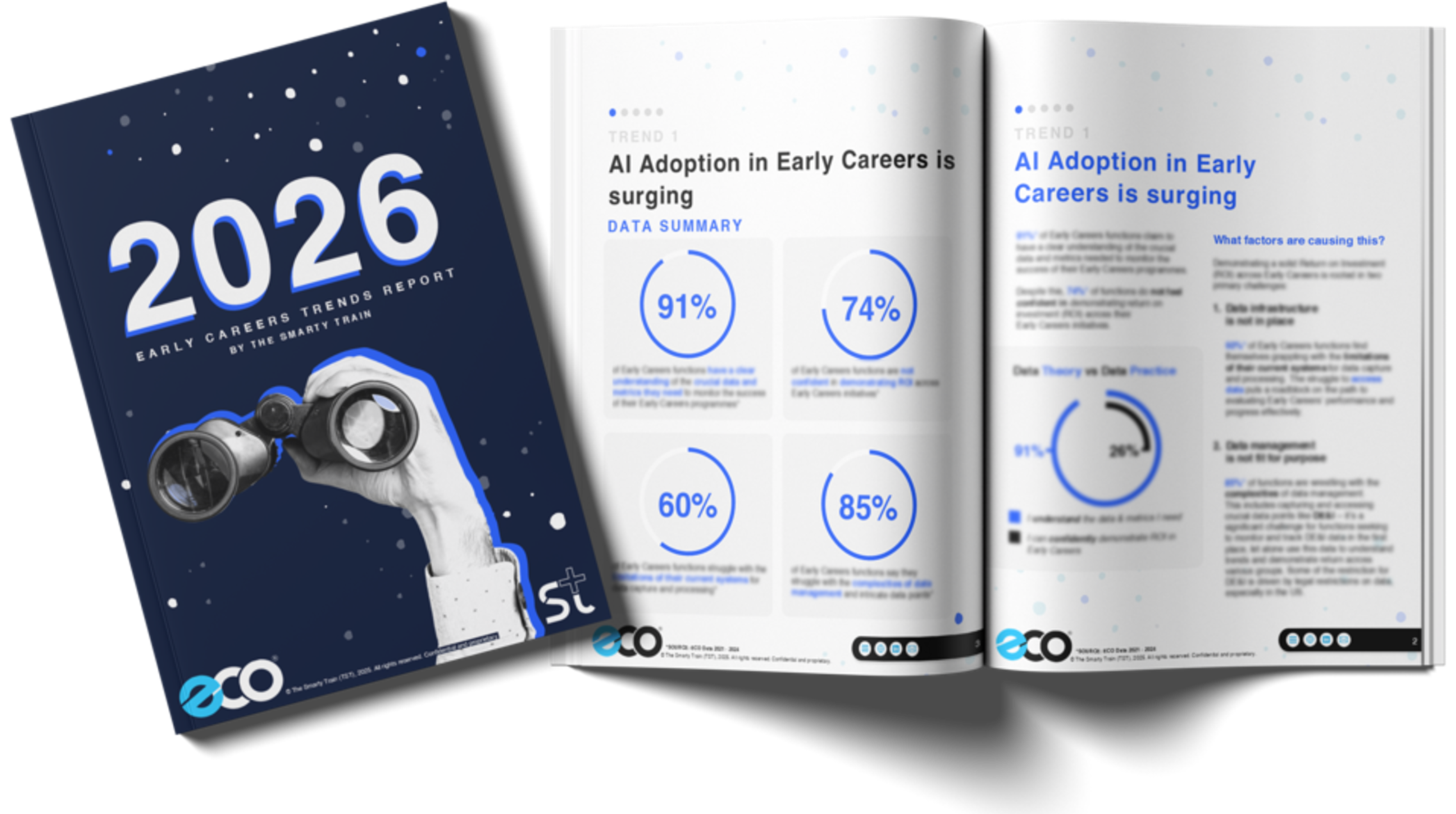
As economic pressure mounts, 74% of organisations can't demonstrate ROI on Early Careers investment. Here's what the data says you can do about it.
In a fiercely competitive talent market, recruiters and HR professionals are turning to AI to find, assess, and hire graduate talent faster than ever.
Do you know what "cheugy" means? Your interns do. If you don't, it might be a sign your internship programme isn't as relevant to your incoming Generation Z.
Most organisations have more data than they know what to do with. Here's how to turn your early careers data into decisions that actually stick.
58% of organisations focus on paperwork during onboarding. But induction is your new joiner's first experience of your culture — and a key driver of long-term retention.
No insights match your filters.